
Who This Helps
Pre-Opening / Efficiency projects involving pre-opening planning
3 Core Takeaways
- 01Use this guide to evaluate pre-opening planning before committing to design, equipment or construction decisions.
- 02Use this article to evaluate pre-opening planning questions before planning or upgrading.
- 03Use the diagrams to understand spatial relationships, bay organization and workflow.
Main text
There are three keys to successful chain operations: first, location; second, location; and third, location again.
Use this visual with the section above to read spatial relationships, bay organization and site conditions.
—Sam Walton, founder of Walmart
Consider KFC:
KFC uses a scoring model for site selection. It first considers the business model, suitable trade areas, product and brand positioning, and affordable rent, then chooses target premises within the appropriate range.
For trade area structure, it assesses whether people within 300–500 metres can support the store, considering high-footfall locations such as schools, workplaces, bus stops and metro stations. It also tracks pedestrian movement and capture rates: how many of every 100 passersby can be attracted inside?
Use this visual with the section above to read spatial relationships, bay organization and site conditions.
—Sam Walton, founder of Walmart (continued)
Finally, forecast sales and work back to affordable rent. If breaking even requires RMB 2,000 a day at an average transaction of RMB 20, the store needs 100 customers daily. Assess whether 100 passersby can be brought inside. If so, the premises may work. This is site selection based on working back from the break-even point. Experience across tens of thousands of stores nationwide has developed into a complete scientific method.
Site selection is equally critical for automotive aftermarket stores and deserves careful consideration by repair shop owners.
I have participated in selecting sites for more than a hundred new chain stores across the aftermarket, education and food service sectors. Reflecting on this work and drawing on mature food service models, I have summarized the following aftermarket site selection strategies.
Use this visual with the section above to read spatial relationships, bay organization and site conditions.
Four major factors affecting site selection
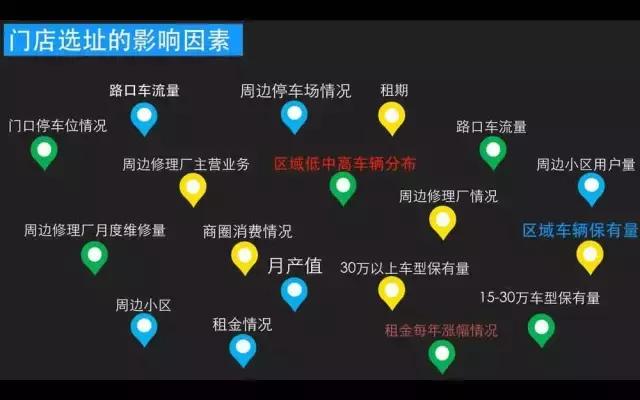
Many factors affect a shop's location:
Use this visual with the section above to read spatial relationships, bay organization and site conditions.
These factors fall into four categories
1. Local vehicle population
a. Local owners' lifestyles and spending habits.
b. Local demographics, including age, gender, occupation, education, population density and growth rate.
c. Number and composition of local households.
d. Consumers' income and spending levels, attitudes toward consumption and purchasing power.
Use this visual with the section above to read spatial relationships, bay organization and site conditions.
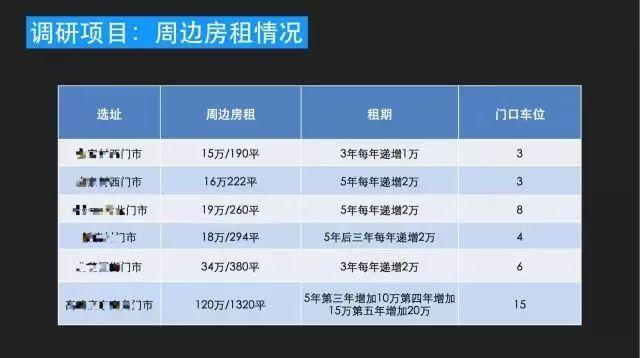
2. Rent and lease term
An expired lease can kill a business. Nobody wants to invest heavily in renovation and be forced out by the landlord before recovering the cost. Securing a long lease, generally more than 5 years, provides a foundation for stable operation.
Use this visual with the section above to read spatial relationships, bay organization and site conditions.
3. Surrounding transport conditions
a. Analyze customer traffic volume, patterns, speed, direction and types, and how well those customers match the shop format.
b. Before choosing a site, understand local traffic conditions, including parking and transport connections.
c. Nearby public facilities or infrastructure that make visits convenient add value to the location.

Use this visual with the section above to read spatial relationships, bay organization and site conditions.
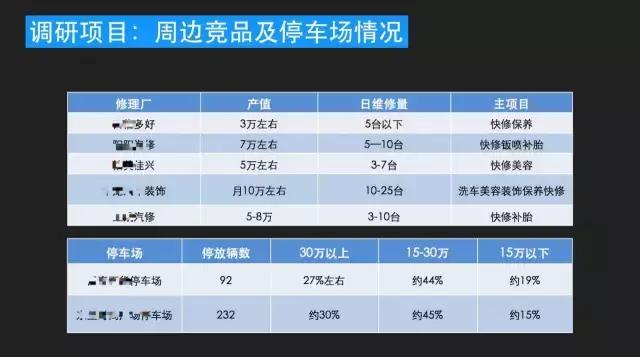
4. Nearby repair shop competitors
Understand competitors, especially similar businesses in the trade area. Examine business format, exact location, number, scale, fit-out, turnover, operating strategy, product range, target customers and visitor numbers.
Use this visual with the section above to read spatial relationships, bay organization and site conditions.
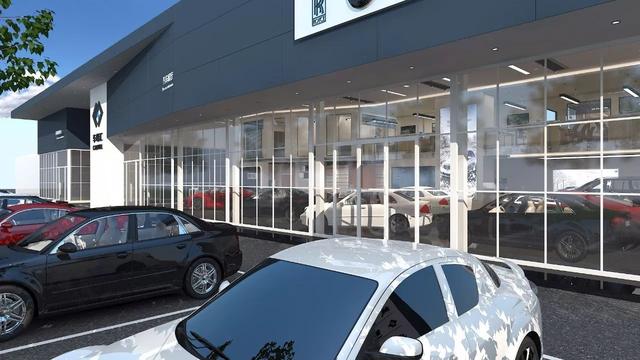
Repair shop design rendering: CheFengHui
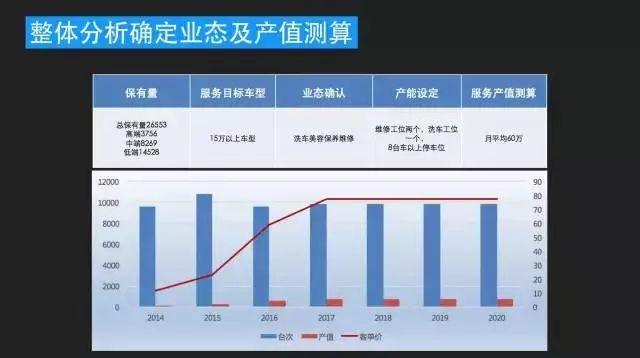
Generate site research data
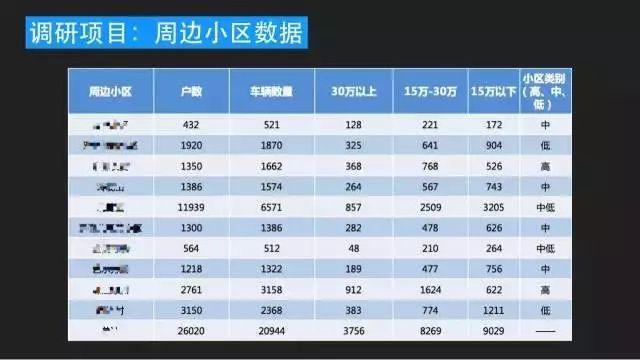
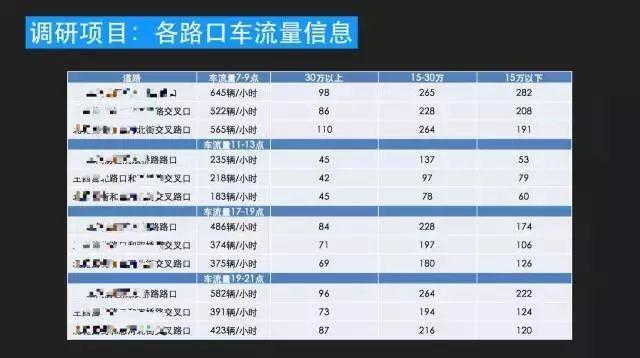
Once the factors that matter most have been identified, assign people to carry out the work—then follow through.
In one previous case, collecting store data took 10 days. Important information has been obscured; click the image for detailed data.
Use this visual with the section above to read spatial relationships, bay organization and site conditions.
Prepare an overall report and forecast future operations
Site selection in one area often involves several candidates. Compare comprehensive scores before making the final selection.
6 principles for selecting chain repair shop locations
Follow these 6 principles on the basis of the analysis above:
1. Vehicle traffic: Find places that attract customers.
2. Target market: Focus on local midrange and premium car owners.
3. Visibility: The shop itself is the best sign. Aim to become a local landmark.
4. Convenience: Ensure convenient access and parking.
5. Economics: Avoid opening only one shop in a city. Regional density supports brand and operational effectiveness.
6. Stability: Choose mature trade areas and communities with established, orderly supporting facilities.
The most important point: Secure the advantage of being first
People vividly remember what they encounter first, and those who rank first leave a strong impression.
Many product advertisements emphasize major achievements. Brands presented as number one often increase consumer confidence in using them.
The same applies to locations. Being the area's only business of its kind or establishing the leading sales record first can become an advantage.
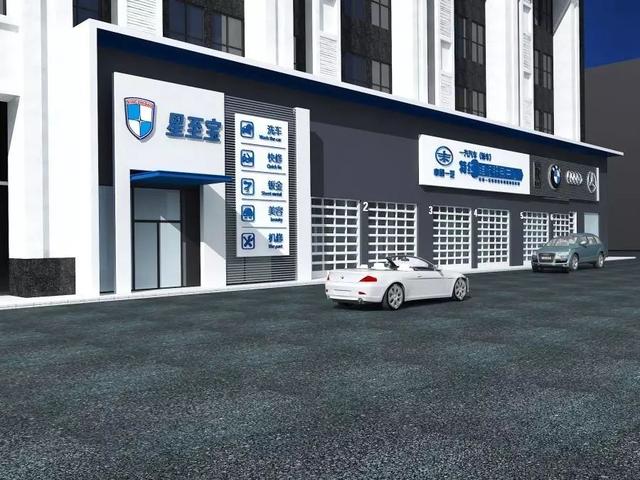
Repair shop design case: Xingzhibao
Source: Zhang Jie, Automotive Aftermarket
Self-Check List
- 01Area supports the target business format
- 02Vehicle entry and exit flow is clear
- 03Budget covers design, equipment and site conditions
Article Keywords
Related Entry Points
Auto repair shop planning, workshop layout, brand SI and drawing support.
Planning ideas for quick service, collision, tire, detailing and dealership projects.
From site diagnosis and layout scheme to implementation support.
Share area, photos or a plan for a quick layout priority review.