
Who This Helps
Efficiency projects involving reception and brand image
3 Core Takeaways
- 01Use this guide to evaluate reception and brand image before committing to design, equipment or construction decisions.
- 02Use this article to evaluate reception and brand image questions before planning or upgrading.
- 03Use the diagrams to understand spatial relationships, bay organization and workflow.
Introduction
NO.1: With new customers, what should we watch out for? 1. Find out clearly what service highlights most attracted customers to the repair shops they used to visit;
2. Design a service plan so that customers who “switch over” won't feel a service gap or feel the service is worse than at their previous shop;
3. On first meeting, remember that “caring behavior” must outweigh “selling behavior”! Make customers who “switch over” feel this shop genuinely cares about them, rather than just trying to make money at all costs. NO.2: How can customers get a better experience? 1. Manage image well — that is, environment 5S management and staff image management — so that customers' first impression on entering is: this is a standardized, well-regulated repair shop;
2.
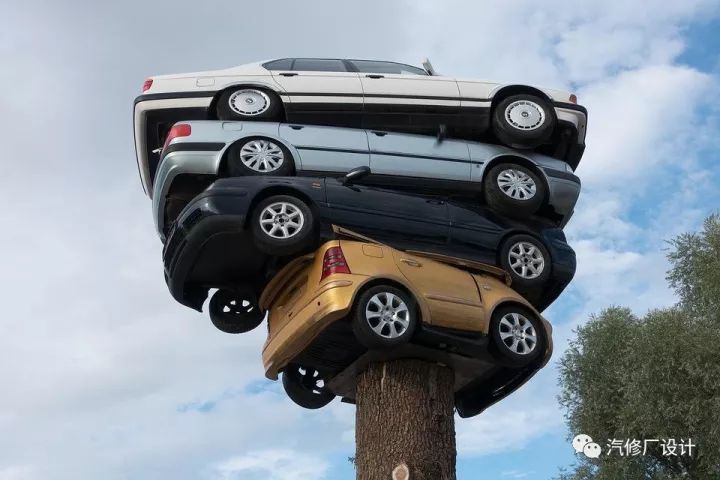
Use this visual with the section above to read spatial relationships, bay organization and site conditions.
Introduction (continued)
Further streamline processes, ensuring smooth process execution with coordinated, orderly links and no jams or disconnections, so customers feel your shop is well managed and highly capable;
3. Research the price system of the repair shops targeted for closure, and readjust your own pricing strategy; try not to price above the target. If prices genuinely run higher in special cases, adjust product combinations and structures to blur price perception, giving customers a good price experience;
4. Focus on repair progress management and repair quality management, resolutely eliminating “delayed delivery” and “rework repairs,” so customers are satisfied with your workshop management and confident in the repair process.

Use this visual with the section above to read spatial relationships, bay organization and site conditions.
NO.3: Customer Management Problems
Many repair companies just sit and wait for customers to come. They have never seriously analyzed where customers come from. The attitude is: customers came on their own initiative, so I just need to fix their cars. Many repair companies pay no attention at all to customer information, mainly in the following ways:
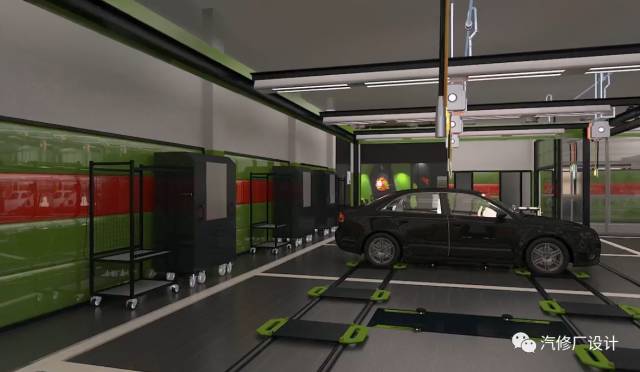
Use this visual with the section above to read spatial relationships, bay organization and site conditions.
1. No Complete Customer Information List
Some owners say: I do have customer information — all my customers' contact details are in my phone. But once owners have customer contact details, they generally don't make good use of them.
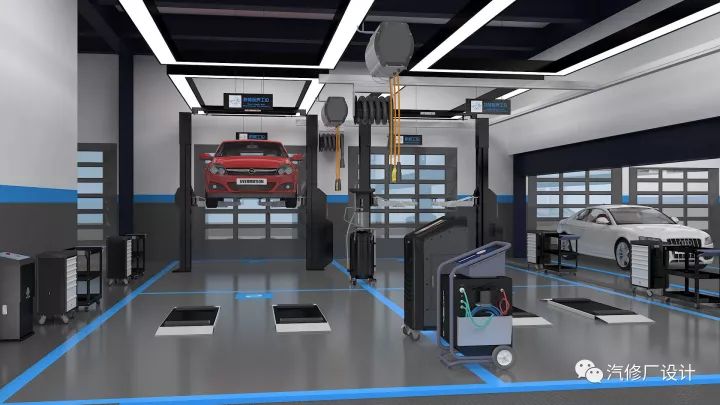
Use this visual with the section above to read spatial relationships, bay organization and site conditions.
2. No Awareness of Proactively Contacting and Following Up With Customers
There is a standardized customer information list, but no one knows how to use it. No one thinks to use it to create value for the shop. This work should be handled by dedicated service staff.

Use this visual with the section above to read spatial relationships, bay organization and site conditions.
3. No Established Follow-Up System
A repair company's follow-ups are mainly of two kinds: repair follow-ups and maintenance reminder follow-ups.
◆ First, Repair Follow-Ups:
After a customer has a repair done at your shop, you should follow up within 10 days: How is the repaired car? Any abnormalities? Are you satisfied with our service attitude? Any good suggestions for our work? And so on. Compared with not following up, the impression on the customer is absolutely different.
◆ Next, Maintenance Reminders:
No matter what repair a customer came for, you should record the current mileage and ask the customer: roughly how many kilometers do you drive per month? Then roughly calculate when the car will be due for maintenance. When maintenance is approaching, call to remind the customer. A customer service specialist's introduction and reminder make it very likely the customer will come to the shop for maintenance.
4. Customer Information Collected but Customers Never Segmented
Some owners ask: customers need segmenting too? The answer is: customers must be segmented. Different customers deserve different treatment. For high-value customers, put in more effort, take special care, and invest more. For example, when receiving a customer, if you discover they lead a fleet, you must take them seriously, because they may well become a major customer. Likewise, for family customers, offer some small discounts. (Customer categories can be shown in many ways: customer segmentation, membership tier, customer loyalty, and activity status — all at a glance.)
5. No regular, systematic customer care. Some repair shop owners do send text messages to customers around holidays, but it's very haphazard — done when remembered, skipped when forgotten. Repair companies must assign dedicated staff to this and persist long-term.
4. Customer Information Collected but Customers Never Segmented (continued)
Don't underestimate a greeting text message: customers feel a human touch. Later, when they need repairs, they'll think of you.
NO.4: No Image, No Face
The image of a repair shop and its mechanics is crucial — clean and tidy always beats dirty and messy. And many mechanics look like they're covered in oil and paint, which greatly reduces customers' trust in you. Some repair shops don't proactively issue receipts after repairs; when customers ask for invoices, they make excuses and refuse. Customers get very unhappy — they think you lack capability and aren't legitimate. Customers quietly slip away like that. Some repair shops issue handwritten repair orders with crooked handwriting. That creates low customer trust and makes it hard to attract customers to spend again. These problems leave repair companies with mostly low-end customers and low profit margins. Some repair shops quote casually, from experience, when a car comes in. Customers feel there are no standards and constantly suspect they're being overcharged.
NO.4: No Image, No Face (continued)
That easily leads to bargaining and lower profits. So even posting a price list on the wall would be much better. And with computerized management giving customers accurate quotes, customers will definitely feel the difference. It not only raises the company's level but also greatly reduces haggling.
NO.5: Computerized Management
Many warehouse managers are paid very well. A warehouse manager must know vehicle models and which part fits which model, so warehouse managers are hard to replace. In fact, once auto parts and repair companies introduce computerized management, these problems disappear. Look it up on the computer and you know which warehouse a part is in, which shelf, which slot. Managed this way, the warehouse manager's job is less technical and much more replaceable. Then there's the problem of mechanic performance statistics. With several mechanics, no one tracks who did how much work. Manual statistics are not only troublesome, time-consuming, and laborious but also inaccurate. There are stacks of account books and several bookkeepers — a huge waste of labor cost!
NO.5: Computerized Management (continued)
In fact, computers do this large volume of simple, repetitive work most efficiently: a computer completes bookkeeping automatically in a second or two, equal to several days of a bookkeeper's work.
NO.6: Insufficient Thinking About Customer Lifetime Value
What is customer lifetime value?
Repair shop owners need to keep a clear head. If you lose a customer, how much money are you giving up? Take an Audi as an example: a customer spends an average of 800 yuan per maintenance visit; driving 30,000 km a year requires 6 maintenance visits; over 10 years, the customer lifetime value is 48,000 yuan. If poor service offends a customer and they never return, what you lose is that 48,000 yuan of customer lifetime value.
If you add 200 regular customers a year, in 10 years you'll have 2,000 regular customers; at 5,000 yuan per customer per year, that's over 10 million yuan in annual sales revenue — a solid guarantee for sustainable development!
NO.7: The Five-Star Standard for Customer Service
The repair industry also has five star-rating standards. One-star service standard: answer every question. Many repair shops can't even manage this most basic, must-have one-star service. If you can answer every question, customers will build trust in you, and that trust will convert into spending. Two-star service standard: stay in touch. Send customers text greetings around holidays. Three-star service standard: dedicated account management. Dedicated account management means assigning each customer who comes for repairs a dedicated customer service manager; whenever customers have any problem, they can call their dedicated customer service manager immediately. The customer service manager must answer, coordinate, and handle the customer's issue, keep following up, and see it through to the end until the customer is satisfied. Four-star service standard: professional advisor.
NO.7: The Five-Star Standard for Customer Service (continued)
A customer service manager only performs a customer coordination role. For high-value customers, you must assign professional advisors who can answer customers' professional questions anytime, immediately. These high-value customers will become the foundation of the shop's sustainable development. Five-star service is the highest realm for a repair company: what is the five-star service standard? It is “long-term partnership.” Through service, customers have become lifelong friends and long-term partners — that is the highest realm of service. Where is the way out for repair companies? 1. Whoever controls more end customers will be the future leader of this industry. As with traditional retail, whoever controls more end customers will stand undefeated in future competition. Only with a growing customer base will the company grow larger and perform better. 2.
NO.7: The Five-Star Standard for Customer Service (continued)
Once out of warranty, or once they find a safer, more reassuring repair shop, customers will quickly abandon 4S dealerships for one-stop quick repair and maintenance shops, which will take most of the 4S dealerships' business. One-stop quick repair and maintenance shops can handle quick repairs, detailing, maintenance, car washing, and more, fully meeting customer needs. One-stop quick repair shops will therefore develop rapidly and take most customers from 4S dealerships. 3. The future direction of one-stop quick repair and maintenance shops is chaining. Open small shops in big cities and big shops in small cities. For a company to grow strong, the fundamental paths are: first, increase revenue; second, reduce costs.
Self-Check List
- 01The first impression builds customer trust
- 02Reception, waiting and handover routes are clear
- 03Facade and interior brand expression are consistent
Article Keywords
Related Entry Points
Auto repair shop planning, workshop layout, brand SI and drawing support.
Planning ideas for quick service, collision, tire, detailing and dealership projects.
From site diagnosis and layout scheme to implementation support.
Share area, photos or a plan for a quick layout priority review.