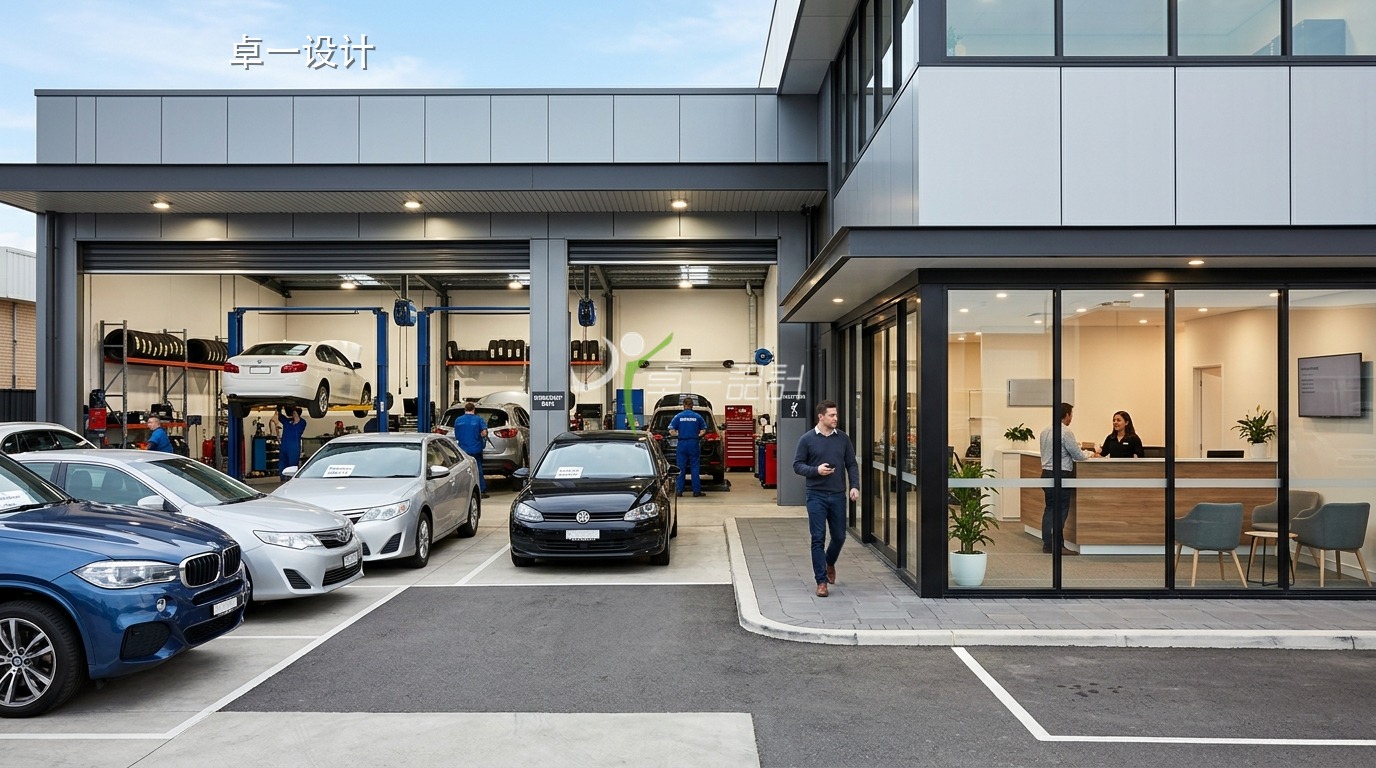
Who This Helps
Repair shop owners evaluating collision center design
3 Core Takeaways
- 01Use this guide to evaluate collision center design before committing to design, equipment or construction decisions.
- 02Use this article to evaluate collision center design questions before planning or upgrading.
- 03Use the diagrams to understand spatial relationships, bay organization and workflow.
Introduction
A collision repair center is not just an auto repair shop with a paint booth added. It is a complete operating system. Long-term efficiency depends on how damaged vehicles enter, where dismantled parts are stored, how sanding dust is separated, how paint booth exhaust is routed, and whether finished vehicles can be delivered in a clean and trustworthy setting.
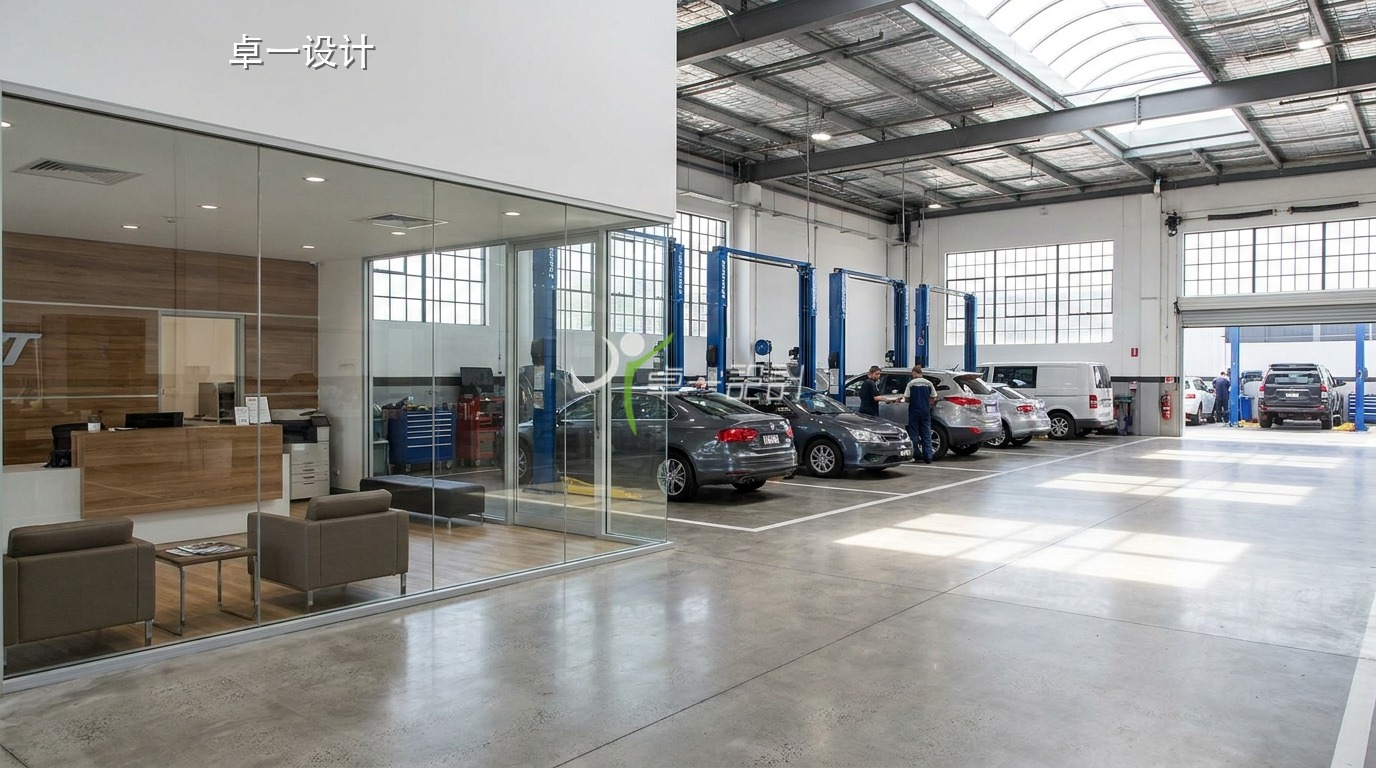
Reception area and workshop space in a modern collision repair center
1. Start with vehicle source and workload, not the paint booth
Many layouts begin by asking where the paint booth should go. The better first question is whether the shop mainly handles insurance collision work, retail repairs, small fast-paint jobs, chain-store support or 4S aftersales support. Different business models need different space rhythms. Collision work needs more waiting, dismantling, parts and finished-vehicle storage. Fast paint values turnover speed. Heavy body repair also needs towing access and longer vehicle occupancy.
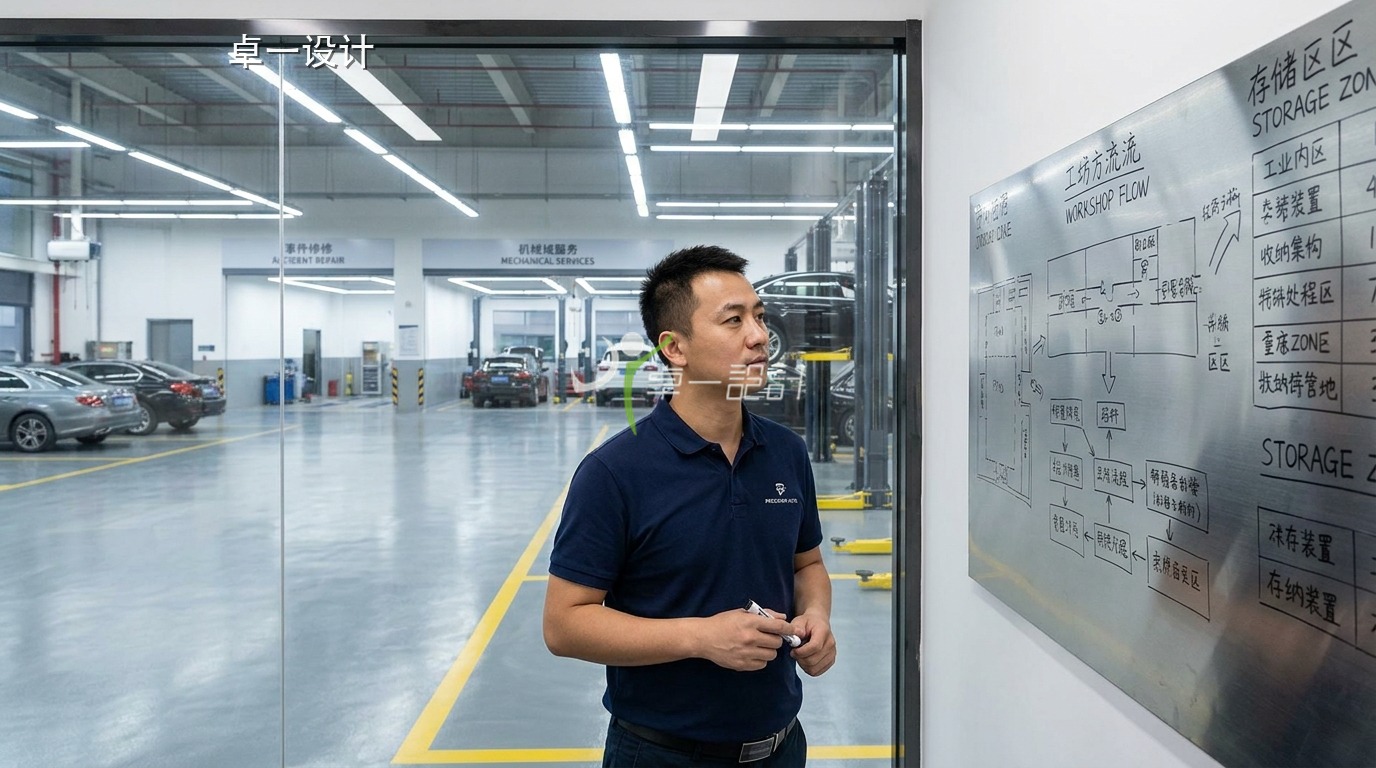
Vehicle source assessment and workshop planning discussion before collision repair center design
2. Damaged vehicle storage is more important than many owners expect
The easiest way for a collision repair shop to become chaotic is not the cars under repair, but vehicles waiting for dismantling, parts, paint or delivery. They do not create direct production work, but they constantly occupy circulation space and work bays. Plan waiting vehicles, dismantled parts, paint-ready parts and completed vehicles separately.
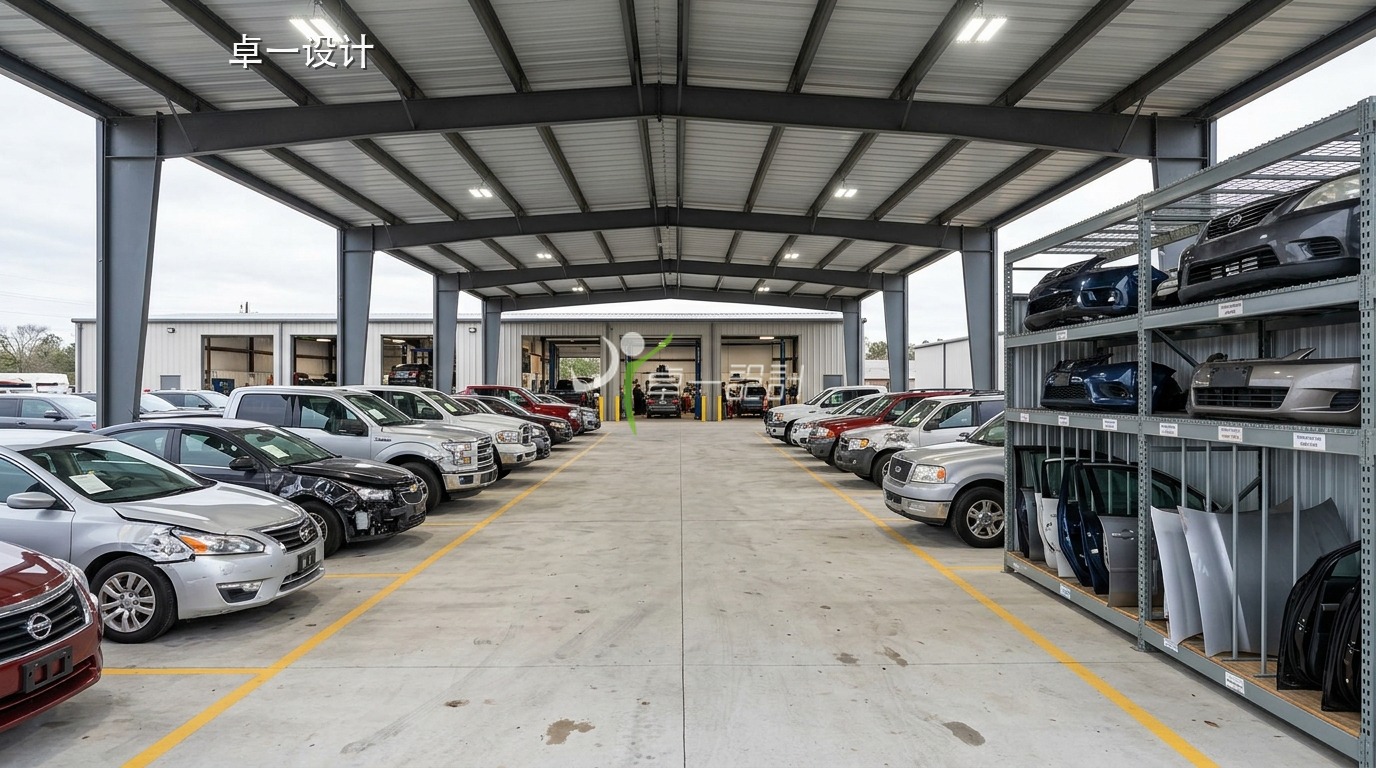
Damaged vehicle storage and parts rack planning in collision repair center layout
3. Body repair, sanding and painting need a process chain
A better flow moves from reception inspection, dismantling, body repair, filler and sanding, painting and baking, polishing and final inspection, to cleaning and delivery. If each step is too far apart, vehicles need to be moved repeatedly. If dirty and clean zones mix, rework increases.
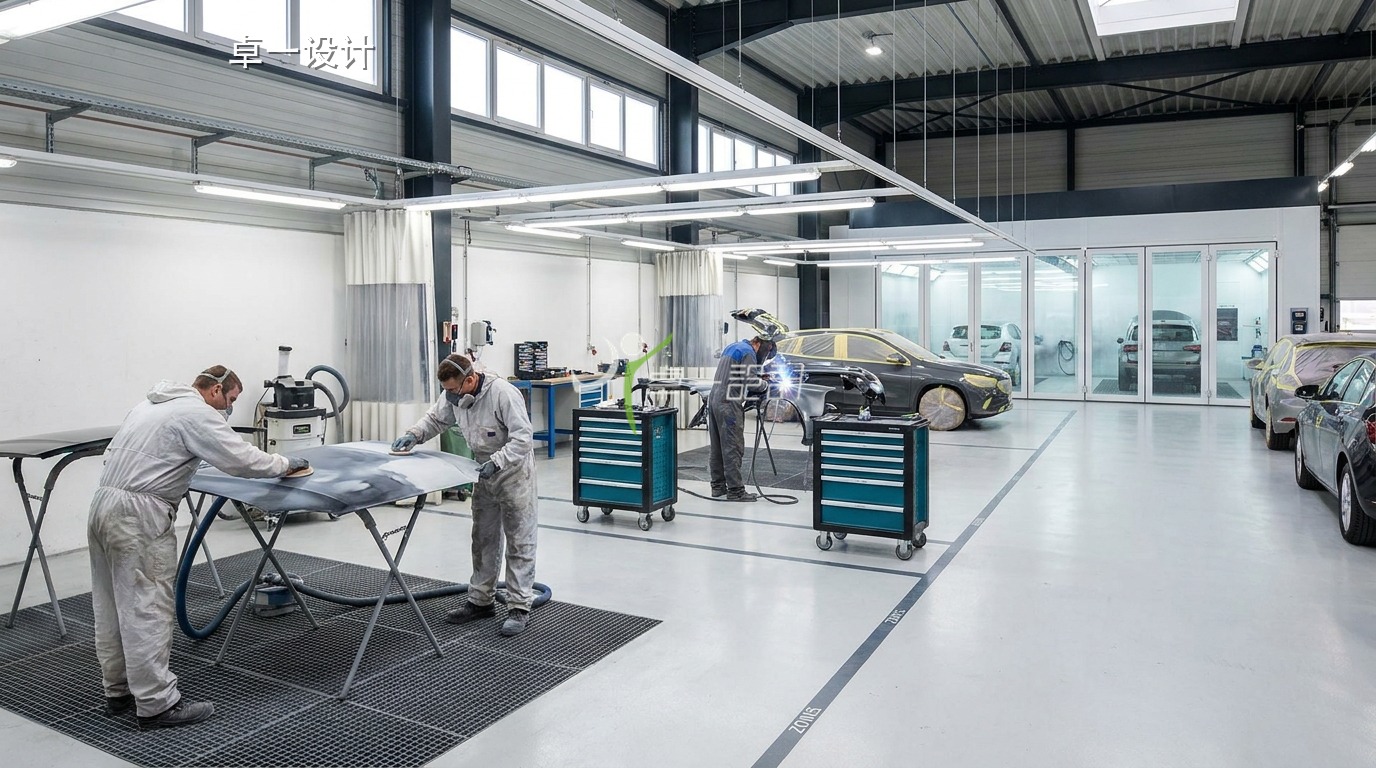
Body repair and sanding workflow chain in collision repair workshop design
4. Paint booth position must consider exhaust, compliance and fire safety
A paint booth is not reasonable just because it fits. It affects exhaust routes, make-up air, environmental equipment, power, maintenance space, fire safety and vehicle access. Check exhaust direction, environmental equipment, mixing room relationship, paint and hazardous waste storage, service access and nearby sensitive areas during early planning.
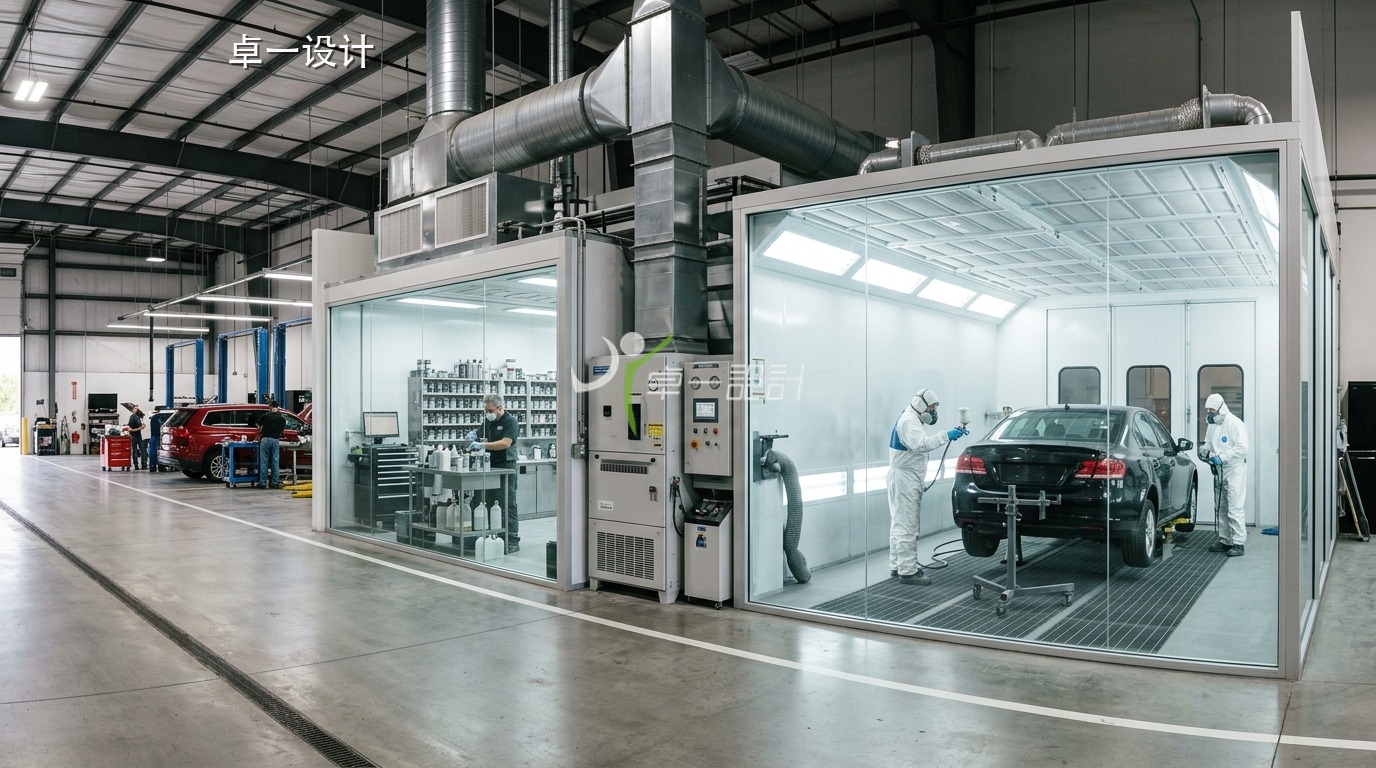
Paint booth, exhaust and environmental equipment in collision repair center design
5. The delivery area should be clean and trustworthy
Collision repair customers care whether the vehicle looks restored. If a finished vehicle is parked in a dark corner next to dust, waste parts and workshop noise, trust drops quickly. The delivery area should be close to final inspection, cleaning and customer reception, but should not cross high-risk work zones.
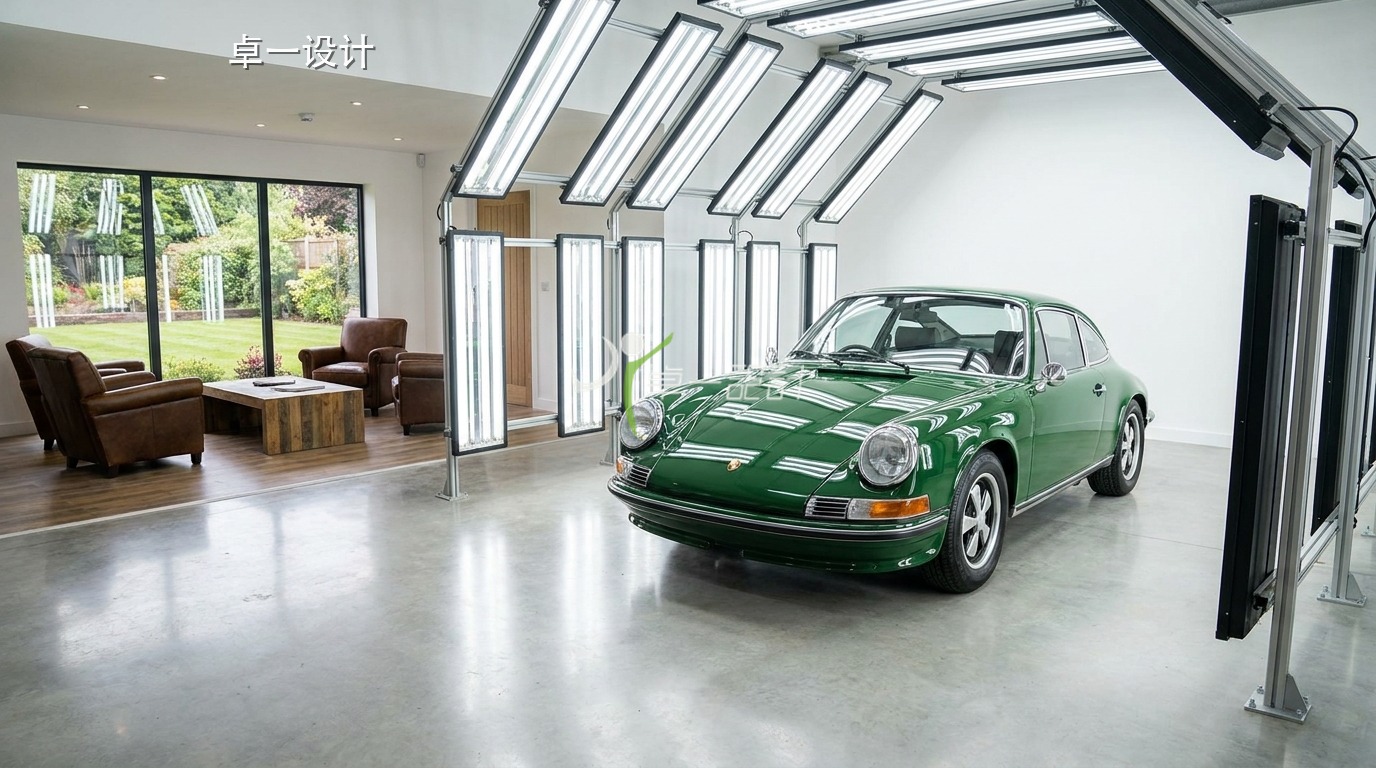
Final inspection and delivery area design for completed collision repair vehicles
6. Engineering conditions should enter the layout stage
A collision repair center needs air compressors, air lines, exhaust, lighting, power, drainage, hazardous waste storage and fire separation. Many problems appear during fit-out because they were not considered during layout planning.
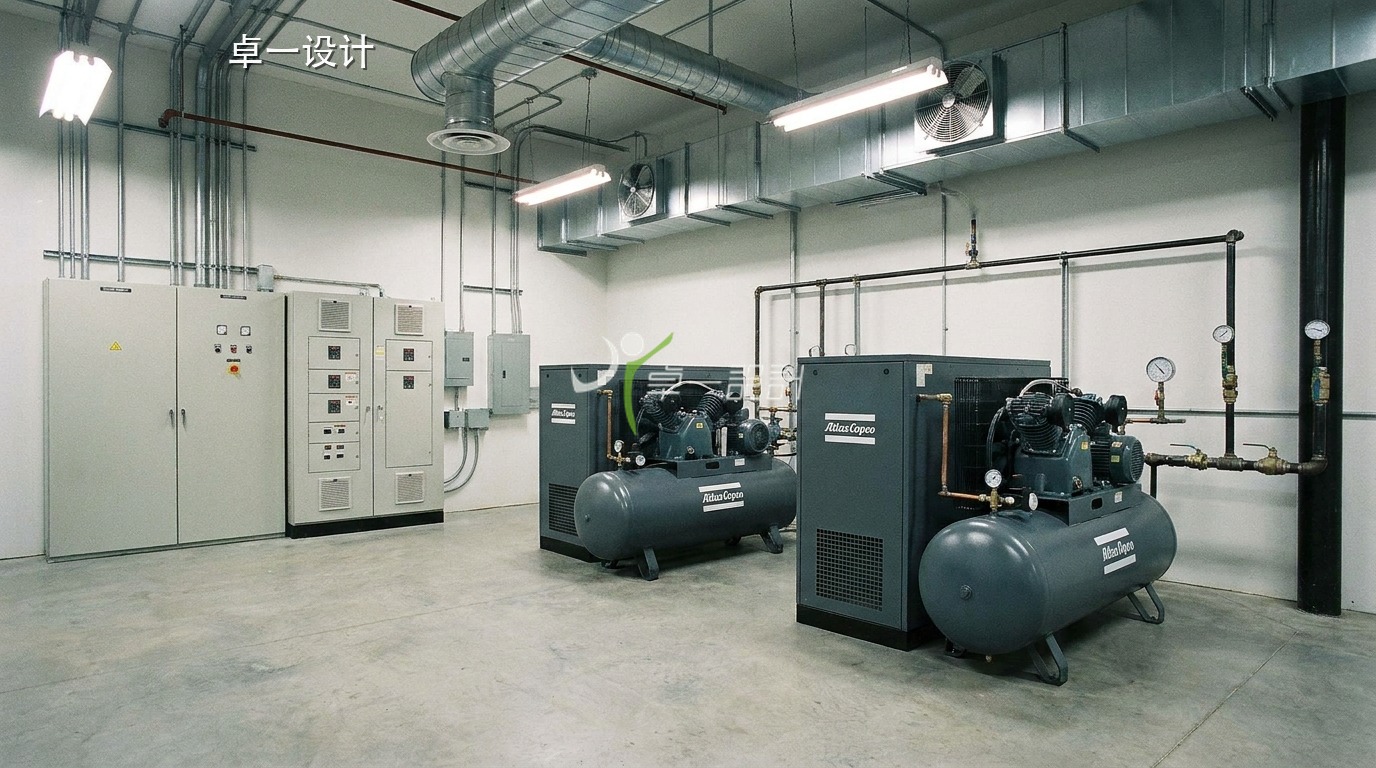
Air compressor and pipeline layout in collision repair center engineering conditions
7. Leave room for future business growth
A collision repair center requires meaningful investment, so the layout should not only serve opening day. Future fast-paint work, a second paint booth, more paint-ready parking, or coordination with mechanical repair, detailing and insurance reception should be considered in the master plan.
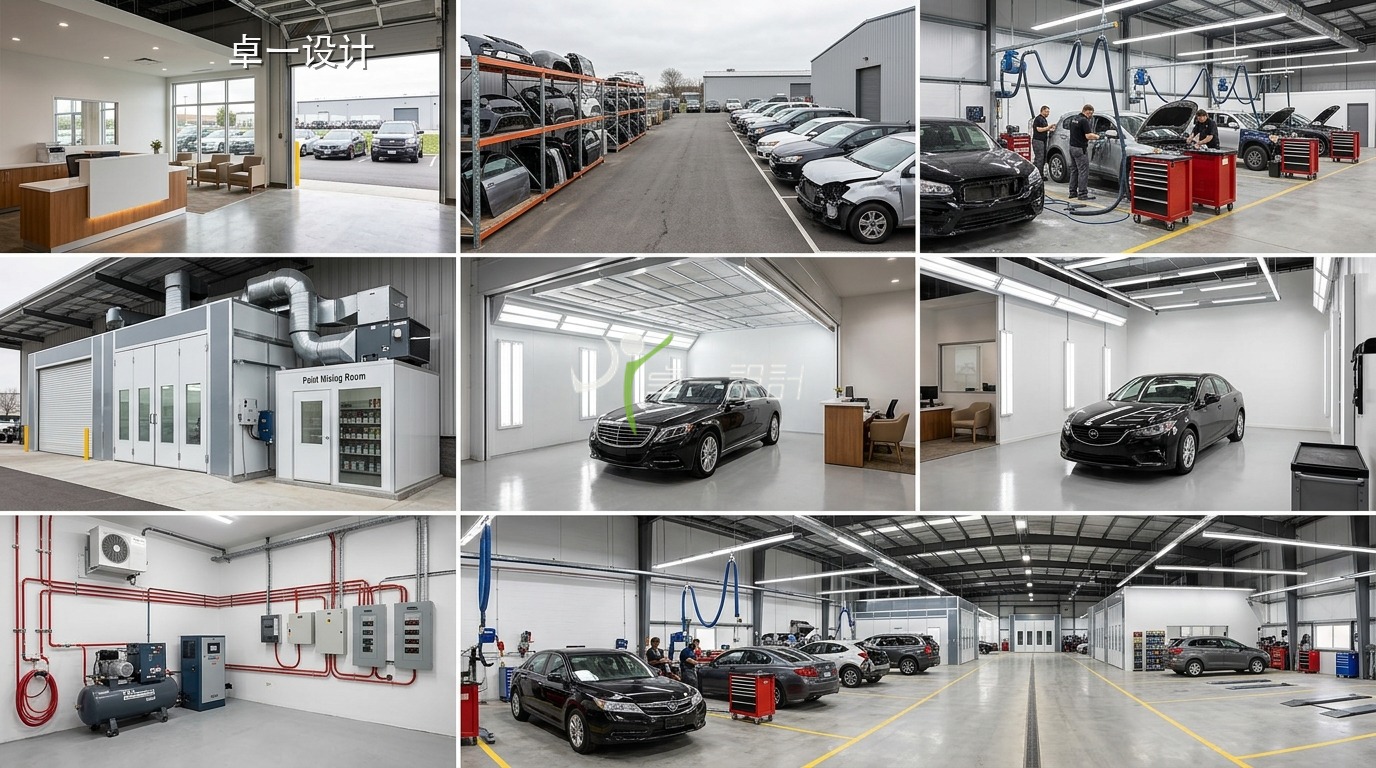
Vehicle flow and functional zoning overview in collision repair center design
Conclusion
The core of collision repair center design is not simply counting equipment and bays. It is about connecting vehicle source, process chain, contamination control, engineering conditions and customer delivery. Before investing, organize the city, site area, floor plan or site photos, expected workload, paint booth needs and opening schedule, then judge whether the site is suitable and how it should be phased.
Self-Check List
- 01Body, paint and QC areas are clearly separated
- 02Paint ventilation and environmental conditions are reserved
- 03Collision workflow does not block general repair
Article Keywords
Related Entry Points
Auto repair shop planning, workshop layout, brand SI and drawing support.
Planning ideas for quick service, collision, tire, detailing and dealership projects.
From site diagnosis and layout scheme to implementation support.
Share area, photos or a plan for a quick layout priority review.